How to Specify Industrial UAV Battery Packs with Smart BMS? – Kingchi
The Three Pillars of Industrial Battery Selection
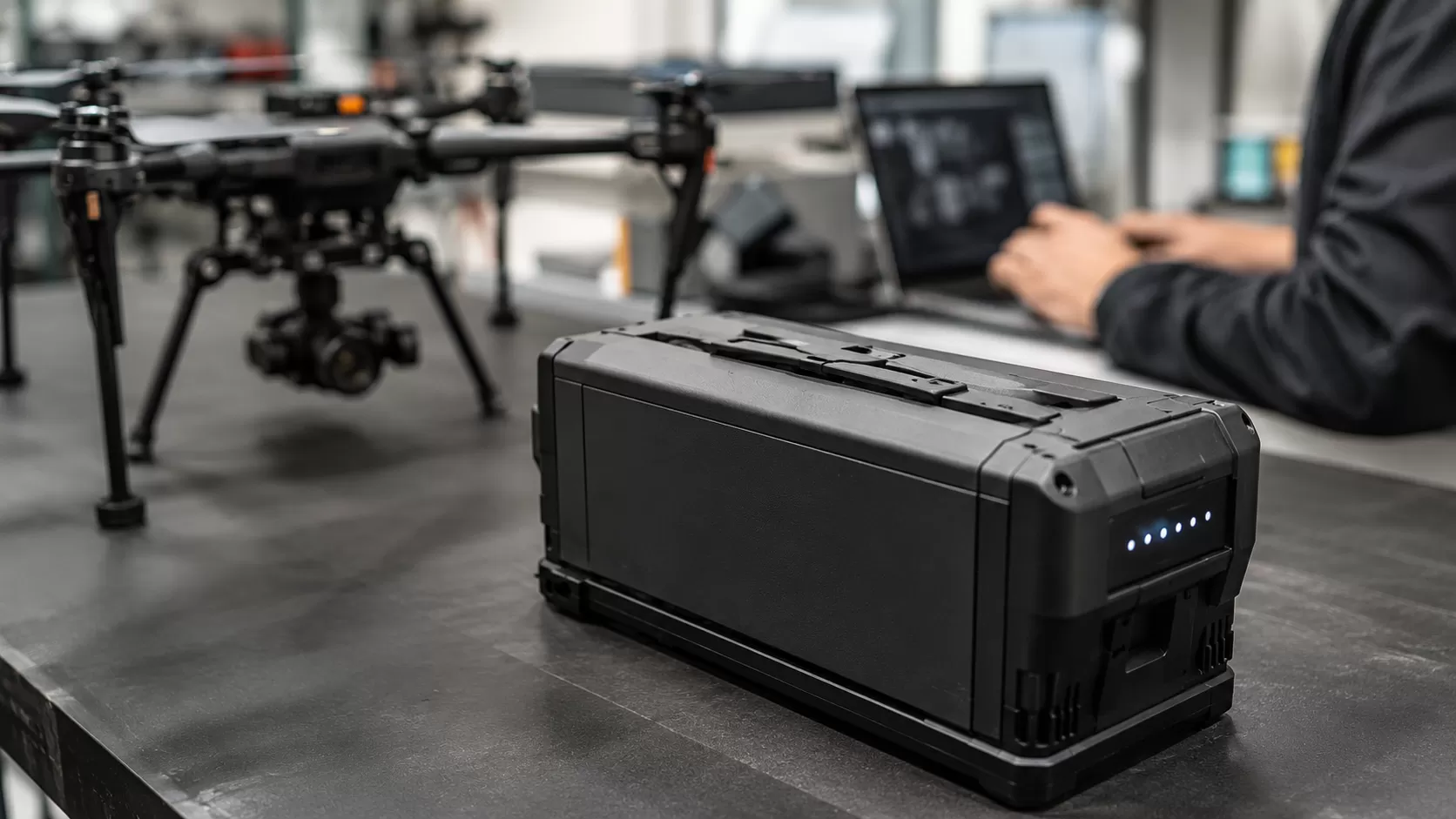
When we design custom drone battery solutions for enterprise clients, we don\’t just look at how long a drone can hover. Industrial environments demand reliability, efficiency, and predictable power delivery. To achieve true drone payload capacity optimization, you must balance three core pillars: capacity, voltage, and discharge rate.
Capacity (mAh) vs. Battery Weight: The Payload Sweet Spot
More capacity means more flight time, but only up to a point. In industrial UAV design, adding raw milliampere-hours (mAh) increases the gross weight of the aircraft, which forces the motors to draw more current just to stay airborne.
To maximize your return on investment, we analyze the energy density (Wh/kg) of the cells. The goal is to find the exact point where adding battery weight no longer yields a beneficial increase in operational flight time.
- Under-specifying capacity: Leads to frequent battery swaps, shorter mission windows, and accelerated battery cycle life degradation.
- Over-specifying capacity: Diminishes net payload capacity, straining lightweight UAV power modules and reducing agility.
- The Sweet Spot: Maximizes usable sensor or cargo weight while ensuring the drone safely completes its mission mapping or spraying loop with a 20% power reserve.
Voltage and Cell Configuration: Why 12S to 18S Drone Battery Setups Dominate
Modern heavy-lift industrial UAVs have shifted away from traditional 4S or 6S systems. Today, 12S to 18S drone battery configurations are the industry standard for commercial platforms.
$$text{Power (W)} = text{Voltage (V)} times text{Current (A)}$$
By raising the system voltage up to 18S (approx. 75.6V fully charged), we drastically reduce the current (amperage) required to generate the same amount of power.
| Battery Configuration | Average Voltage | Current Draw (at 3000W) | Heat Generated ($I^2R$) | Ideal Application |
|---|---|---|---|---|
| 6S LiPo | ~22.2V | 135A | Extremely High | Small filming drones, light inspection |
| 12S LiPo/Li-ion | ~44.4V | 67.5A | Medium-Low | Enterprise mapping, medium payloads |
| 18S High-Voltage | ~66.6V | 45A | Extremely Low | Heavy-lift logistics, agricultural spraying |
Lower current means your electronic speed controllers (ESCs) and wiring harnesses run significantly cooler. This reduction in thermal stress extends the lifespan of your internal components and prevents premature power fade during long operations.
Discharge Rate (C-Rating): Continuous vs. Burst Limits
An industrial drone rarely flies in a static, calm environment. Wind resistance, sudden altitude adjustments, and heavy payloads require instantaneous bursts of power. This is where understanding the difference between continuous and burst C-ratings becomes critical.
- Continuous C-Rating: The maximum current the battery pack can discharge safely and continuously until it is empty. For long-range mapping, a steady, moderate continuous rating preserves cell health.
- Burst C-Rating: The peak current the pack can sustain for short intervals (typically 5 to 10 seconds).
If your drone encounters a sudden 25-knot wind gust while carrying a full payload, the flight controller will instantly demand a massive spike in current to stabilize the platform. Using a high-discharge-rate LiPo pack ensures the voltage won\’t sag during these critical moments, preventing catastrophic mid-air power failures.
Battle of the Chemistries: Selecting the Core Cell Technology
Choosing the right chemistry is the most critical decision when you specify UAV battery packs for industrial drones. The cell technology you choose dictates your flight time, payload capacity, and operational limits. We manufacture three primary cell types tailored to distinct commercial drone applications.
High-Discharge-Rate LiPo Packs for Heavy-Lift Operations
For demanding operations like agricultural spraying and heavy-lift logistics, high-discharge-rate LiPo packs are the industry standard. These packs deliver massive bursts of power required to lift heavy payloads and stabilize large airframes in turbulent winds. When rapid power delivery is non-negotiable, our high-discharge-rate LiPo solutions provide the necessary punch without voltage sags.
Industrial Lithium-Ion Cells for Long-Range Mapping
When your main goal is maximizing flight endurance rather than raw power, industrial lithium-ion cells are the ideal choice. These cells offer superior energy density (Wh/kg), making them perfect for long-range mapping, surveying, and VTOL applications. By opting for a high-quality lithium-ion cell configuration, operators can significantly extend time-on-station for data collection missions where payload weight remains constant.
Next-Generation Semi-Solid State Drone Batteries
For enterprise fleets operating in extreme environments, next-generation semi-solid state drone batteries represent the cutting edge. They bridge the gap by offering higher energy density than traditional LiPo packs along with enhanced thermal stability. These cells perform exceptionally well in cold climates and high-risk environments, providing a safer, longer-lasting power source for critical industrial inspections.
| Battery Chemistry | Key Advantage | Best Industrial Application |
|---|---|---|
| High-Discharge LiPo | Maximum power output & current delivery | Agricultural spraying, Heavy cargo logistics |
| Industrial Li-ion | Highest energy density (Wh/kg) | Long-range mapping, VTOL surveying |
| Semi-Solid State | Extreme temperature resilience & safety | Infrastructure inspection, Enterprise fleets |

The Smart Drone BMS Layer: Turning Raw Power into a Fleet Asset
A high-performance battery is useless without the intelligence to manage it. In industrial operations, the Smart drone BMS (Battery Management System) acts as the brain, transforming a simple energy cell into a reliable enterprise asset. We design our systems to go beyond basic safety, providing real-time data that ensures mission success and fleet longevity.
Critical Protection and Cell Balancing
Maintaining the health of your pack starts at the cell level. Our smart systems prioritize:
- Per-cell Voltage Monitoring: Precise tracking to prevent individual cell over-discharge or over-charge.
- Active Balancing: Ensuring all cells stay at equal voltage levels to maximize usable capacity.
- Over-current Prevention: Instant shut-off or throttling during power spikes to protect the custom drone battery design and the UAV\’s propulsion system.
Thermal Management and State of Health (SoH)
Heat is the enemy of lithium chemistry. Our BMS layers incorporate advanced thermal sensors to prevent overheating during high-load maneuvers. Furthermore, by tracking the State of Health (SoH), fleet managers can see the exact degradation curve of each pack. This allows you to retire aging batteries before they become a liability in the field, optimizing your total cost of ownership.
Enterprise Integration via CAN bus and SMBus
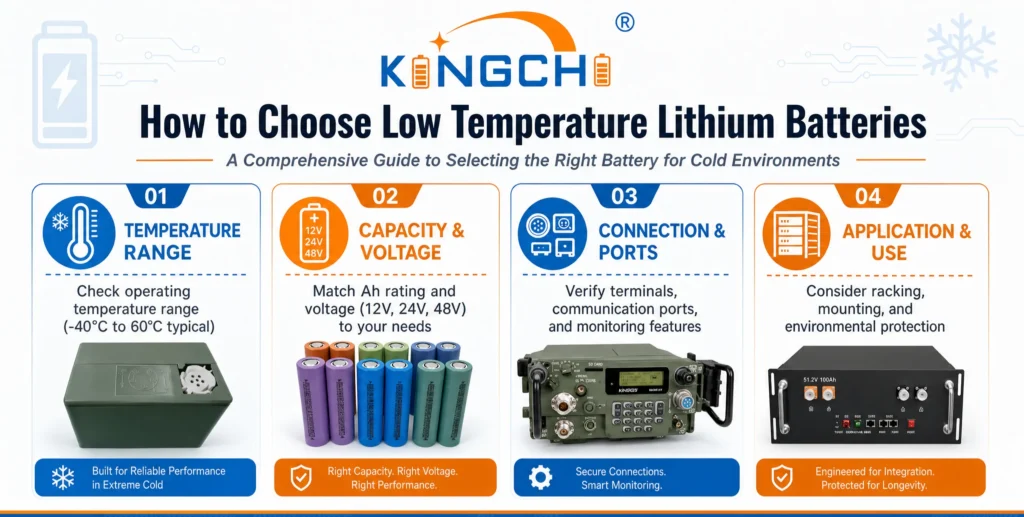
For professional operators, data integration is non-negotiable. Our smart modules, much like the advanced SMBus-enabled smart batteries used in tactical communication, allow for seamless communication with flight controllers.
- CAN bus & SMBus Protocols: Delivers live telemetry including remaining percentage, cycle count, and temperature directly to the GCS (Ground Control Station).
- Predictive Maintenance: Linking BMS data to enterprise UAV fleet management software ensures every flight is backed by data-driven confidence.
Application-Specific Blueprint Matrix
Industrial drone operations demand power systems tailored to specific mission profiles. One-size-fits-all solutions compromise flight times and safety margins. As a leading power solution manufacturer, we engineer application-specific configurations to maximize aerial performance.
+————————–+————————-+————————-+————————-+
| Application | Battery Technology | Key Configuration | Primary Focus |
+————————–+————————-+————————-+————————-+
| Ag Spraying & Seeding | High-Discharge LiPo | 12S to 14S / High C | Rapid Burst Power |
| — | — | — | — |
| Mapping & Survey VTOL | High-Density Li-ion | 6S to 12S / Lightweight | Sustained Energy Density |
| Infrastructure Inspect | Smart LiPo/Li-ion | Integrated Smart BMS | Redundancy & Safety |
| Heavy Cargo Logistics | Semi-Solid State | 14S to 18S / High Volt | Max Payload Capacity |
+————————–+————————-+————————-+————————-+
Custom Drone Battery Design Specs for Agricultural Spraying and Seeding
Ag drones operate in brutal environments, requiring rapid acceleration and heavy lifting to manage shifting liquid payloads.
- Power Requirements: High-discharge-rate LiPo packs that handle massive continuous current draws and aggressive wind corrections.
- Enclosure Rating: IP67-rated sealed casing to protect cells from chemical corrosion, fertilizers, and moisture.
- Thermal Design: Advanced heat-sink integration to prevent overheating during rapid back-to-back field charging.
Lightweight UAV Power Modules for Mapping and Surveying VTOLs
Fixed-wing and VTOL mapping drones prioritize endurance and low weight over brute discharge force. For long-range surveying, we design specialized lightweight UAV power modules using premium high-energy-density lithium-ion cells.
- Energy Density: Maximized watt-hours per kilogram (Wh/kg) to extend aerial coverage per flight.
- Form Factor: Custom aerodynamic footprints that slip directly into narrow VTOL fuselages without shifting the center of gravity.
- Voltage Stability: Flat discharge curves to ensure consistent sensor and payload power during multi-hour missions.
Safety-First Power Configurations for Industrial Infrastructure Inspection
Close-range inspections of power lines, oil rigs, and bridges leave zero room for power failures.
- Dual-Pack Redundancy: Split-pack architectures that allow the flight controller to maintain control even if a cell group fails.
- Smart Drone BMS Integration: Real-time telemetry reporting per-cell health and temperature data directly to the ground control station.
- EMI Shielding: Enhanced shielding to prevent high-voltage electromagnetic interference from disrupting battery communications.
Maximum Voltage Setups for Heavy Cargo and Logistics Heavy-Lift Industrial UAVs
Logistics and heavy cargo transport demand extreme power output without spiking system currents to dangerous levels. To meet this challenge, we build high-voltage 14S to 18S drone battery systems that drive large-stator motors efficiently.
- Voltage Optimization: Stepping up to 18S configurations reduces current draw, minimizes heat buildup across the ESCs, and prevents power sagging under maximum payload capacity.
- Interconnect Reliability: Heavy-duty, spark-proof connectors designed to handle sustained high-wattage power transfer safely.
- Structural Reinforcement: Ruggedized internal shock absorption to protect large-capacity cell arrays from structural vibrations during heavy-lift operations.
Compliance, Safety, and Maximizing TCO
Mandatory Shipping and Safety Certifications
Operating a commercial drone fleet demands strict adherence to international safety regulations. High-capacity drone batteries must possess UN38.3 certification to ensure safe transport via air and ground freight, alongside CE standards compliance for regional market access. These certifications are not optional bureaucratic hurdles; they guarantee that the packs have undergone rigorous thermal, vibration, and impact testing. Deploying non-certified power solutions risks severe regulatory penalties and compromises the safety of your entire operation.
Field Maintenance Framework for Longevity
Maximizing your battery cycle life and TCO (total cost of ownership) requires a disciplined field maintenance routine. Industrial batteries represent a significant capital investment, and extending their operational life directly enhances profitability.
- Storage Voltage: Never store packs fully charged or completely depleted. Maintain a storage charge of 3.8V to 3.85V per cell.
- Logistical Tracking: Utilize localized fleet management software to track the cycle count and resistance of each pack.
- Retirement Thresholds: Retain precise retirement metrics, decommissioning cells once their maximum capacity drops below 80% of the original rating.
For specialized field operations requiring ruggedized, military-grade power reliability during transport and ground support setup, integrating robust solutions like the BB-2590/U Li-ion battery pack ensures your field command hardware stays online alongside your UAV fleet.
Thermal Runaway Prevention
Safety in the field centers on thermal runaway prevention. Large-format industrial drone batteries store massive amounts of energy, making strict storage and handling protocols vital.
| Action Item | Field Practice | Prevention Goal |
|---|---|---|
| Storage | Use explosion-proof charging bags or heavy-duty flight cases. | Contain accidental ignition or venting. |
| Discharge | Avoid discharging packs past the safe 15% threshold. | Prevent permanent internal cell damage. |
| Environmental Control | Cool packs completely before placing them on a charger. | Eliminate localized hot spots and swelling. |
Implementing these practices safeguards your crew, protects your expensive payloads, and optimizes the long-term return on your power investment.
Frequently Asked Questions
How do I calculate the optimal battery weight for my drone payload capacity optimization?
To achieve the best drone payload capacity optimization, you must balance energy density with maximum take-off weight (MTOW). As a general rule of thumb for industrial platforms, the battery pack should account for 30% to 45% of your total MTOW.
To find your specific sweet spot, use this quick framework:
- Calculate Net Payload: Subtract the dry frame weight and electronics from your MTOW.
- Determine Thrust-to-Weight Ratio: Ensure your propulsion system maintains at least a 2:1 thrust-to-weight ratio at hover with full payload.
- Evaluate Energy Density: If your payload is heavy, select high-performance UAV battery packs with a high energy density (Wh/kg) to keep the structural weight low without sacrificing flight time.
Why do enterprise UAV fleet management operations prefer semi-solid state drone batteries?
Enterprise UAV fleet management operations are rapidly transitioning to semi-solid state technology for three clear operational advantages:
- Higher Energy Density: They deliver up to 280–300 Wh/kg, drastically extending mission times compared to traditional standard LiPo cells.
- Enhanced Thermal Stability: The semi-solid electrolyte drastically reduces the risk of internal short circuits and thermal runaway, protecting expensive enterprise payloads.
- Extreme Environment Resilience: These packs maintain stable voltage output and discharge curves even in freezing conditions (down to -20°C), minimizing seasonal fleet downtime.
What are the risks of using a battery pack without UN38.3 certification?
Deploying an industrial drone battery that lacks UN38.3 certification introduces severe commercial, legal, and safety liabilities to your enterprise:
- Ground Borders and Shipping Bans: You cannot legally transport these batteries via commercial air cargo or international shipping lines.
- Insurance Voidance: In the event of a crash, property damage, or site fire, insurance underwriters will routinely deny claims if the power system lacks standard safety certifications.
- Catastrophic Field Failures: Uncertified packs generally lack rigorous vibration, impact, and thermal shock testing, making them highly susceptible to swelling, structural failure, and sudden mid-air voltage drops.
Frequently Asked Questions

Get a Fast, Custom Bamboo Quote