2026 Best Mil Spec Battery Pack Suppliers for Aerospace and Military
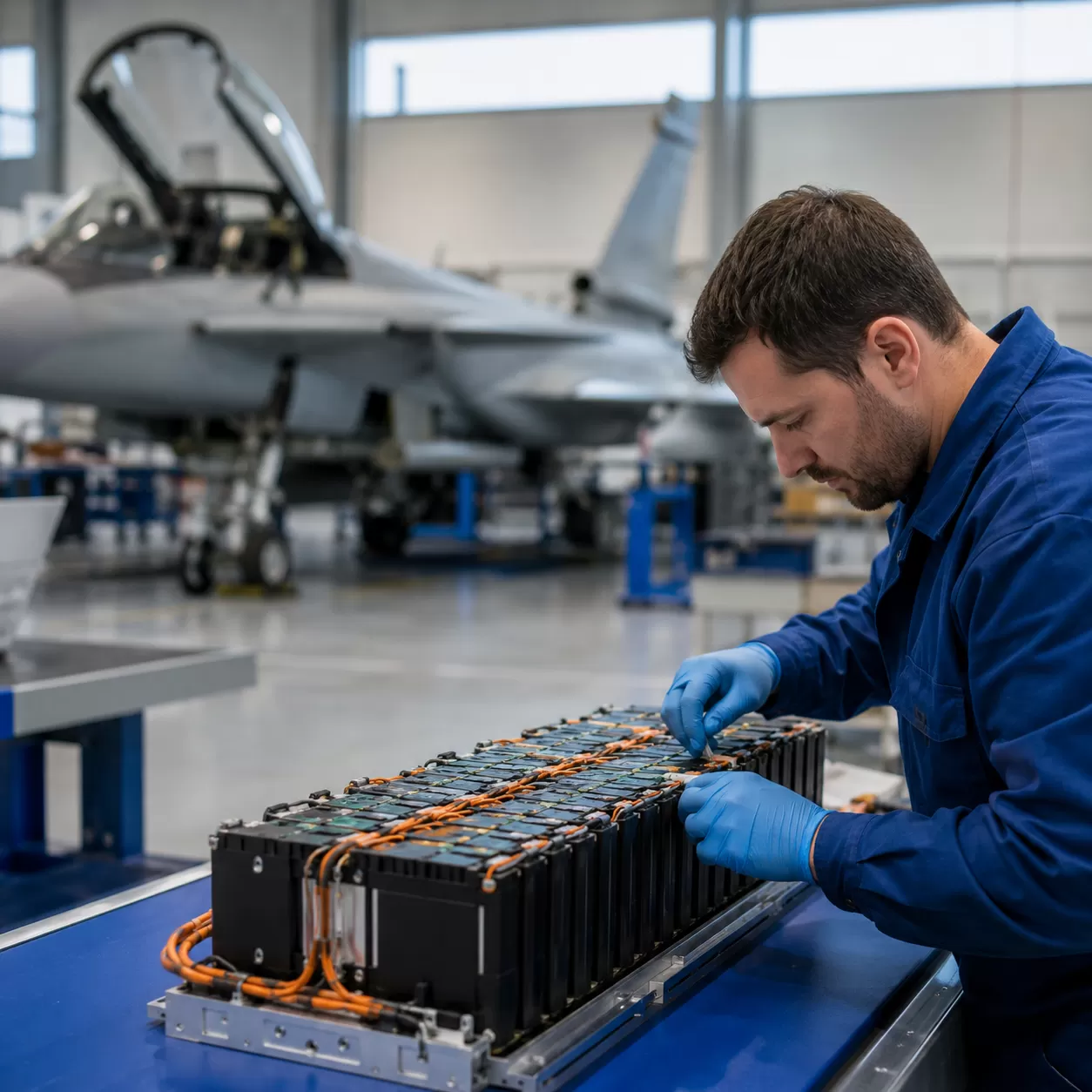
Are you struggling to source rugged military battery packs that actually survive extreme battlefield conditions and meet strict defense standards? Choosing the wrong power partner can stall a multi-million dollar defense contract or, worse, compromise a mission.
As an industry insider, I know that securing an ITAR registered battery manufacturer with true engineering depth is a major challenge for procurement teams.
Power reliability in the field isn\’t optional. Whether you are designing aerospace UAV battery solutions or outfitting tactical squads, you need absolute certainty.
In this guide, you will discover the elite custom battery pack manufacturers for military applications, the critical certifications you cannot skip, and how to vet a military defense battery pack manufacturer for long-term mission success.
Let\’s dive right in.
Core Criteria for Selecting an Aerospace & Military Battery Supplier
When lives and multi-million dollar missions are on the line, there is zero room for power failure. Selecting the right battery pack manufacturers for aerospace and military applications isn’t just about finding a vendor—it’s about locking in a partner who understands the absolute finality of mission-critical performance. We build power solutions that withstand the worst environments on Earth and above it, driven by three non-negotiable pillars of engineering.
Stringent Regulatory Compliance & Registrations
We don\’t just claim to build the best; we prove it through rigorous legal and quality clearances. Securing rugged military battery packs requires a manufacturer deeply embedded in defense protocols.
- ITAR Registered Battery Manufacturer: Crucial for defense trade control compliance, ensuring all technical data and manufacturing processes safeguard national security.
- AS9100D Certified Battery Supplier: The gold standard for aviation, space, and defense industries, ensuring every phase of our manufacturing hits flawless quality management metrics.
Rigorous Mil-Spec & Aerospace Testing Standard Compliances
Military and aerospace environments are unforgiving. Our hardware is engineered and heavily vetted to survive extreme mechanical stress, thermal shocks, and atmospheric pressures.
| Testing Standard | Core Focus Areas for Battery Compliance |
|---|---|
| MIL-STD-810H | Environmental engineering considerations and laboratory tests (shock, vibration, extreme altitudes). |
| MIL-STD-461G | Electromagnetic compatibility (EMI/EMC) to ensure the battery doesn\’t interfere with tactical communications. |
| UN 38.3 | Safety testing for transportation, guaranteeing safe transit on military cargo and commercial flights. |
Advanced Engineering & BMS Interactivity
A dummy battery is a liability. Modern warfare and aerospace operations demand intelligent custom military battery packs equipped with a smart Battery Management System (BMS) for defense.
Our highly integrated BMS configurations do more than just monitor voltage; they act as the brain of your power system:
- State of Charge (SoC) & State of Health (SoH) Tracking: Provides real-time, pinpoint telemetry to the operator, avoiding unexpected field dropouts.
- Active Balancing & Protection Circuits: Prevents overcharging, deep discharging, and thermal runaway under extreme high-drain scenarios.
- Secure Protocol Communication: Integrates seamlessly with vehicle or soldier-worn tactical systems via SMBus, I2C, or CAN bus interfaces, maintaining uninterrupted data integrity.
Critical Applications Demanding Rugged Military & Aerospace Battery Packs
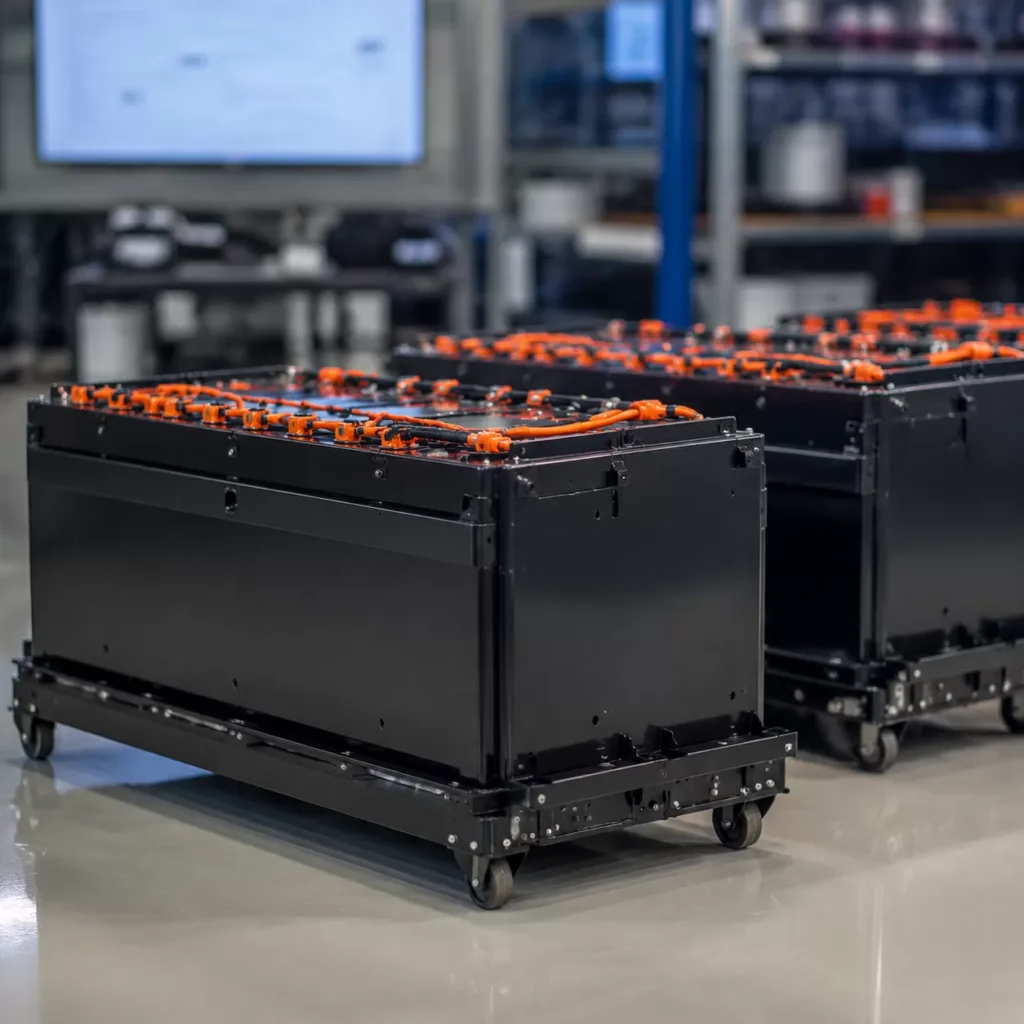
Failure is not an option in defense and aerospace operations. Mission success depends on unrelenting, rugged military battery packs engineered to survive extreme environments. From high-altitude flight to deep-sea deployments, specialized power systems must withstand severe vibration, impact, and thermal cycling.
Aerospace & Unmanned Aerial Systems (UAS/UAV)
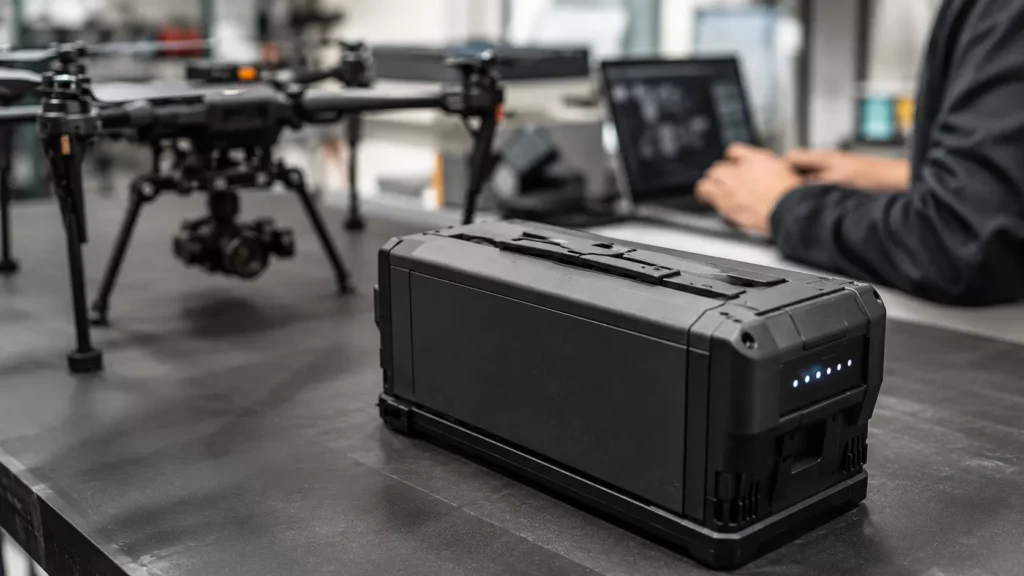
Modern military drones and loitering munitions require maximum energy density to extend flight times and payload capacities. High-performance aerospace UAV battery solutions deliver the high discharge rates needed for sudden aerial maneuvers while maintaining structural integrity during rapid pressure drops and sub-zero high-altitude temperatures.
Tactical & Soldier-Worn Equipment
Dismounted soldiers rely on a vast ecosystem of electronics, including communications gear, night-vision devices, and heads-up displays.
- Conformal Wearable Battery (CWB): Flexible, low-profile packs that integrate into body armor to reduce physical strain.
- Centralized Power: Lightweight, high-capacity systems that reduce the overall battery weight a soldier must carry into combat zones.
Naval, Subsea, and Ground Systems
From autonomous underwater vehicles (AUVs) to heavy armored combat vehicles, defense platforms require massive, resilient energy reserves.
- Subsea Systems: Pressure-tolerant battery enclosures designed for deep-ocean propulsion and monitoring.
- Ground Fleet: Ruggedized 6T lithium military vehicle batteries that replace heavy, legacy lead-acid systems, offering faster charging and longer cycle lives under constant vibration.
Missiles, Munitions, and Directed-Energy Weapons (DEW)
Precision-guided munitions and next-generation directed-energy weapons demand instant, massive pulses of power. These applications use highly specialized custom military battery packs capable of sitting dormant for years, yet activating in milliseconds to deliver flawless performance under extreme gravitational forces ($Gtext{-forces}$).
Evaluating the Top Battery Pack Suppliers in the Industry
Choosing among the best battery pack suppliers for aerospace and military applications requires balancing unyielding reliability with manufacturing flexibility. The defense sector cannot afford power failures in the field, making the selection of a manufacturing partner a critical mission decision.
Global & Legacy Tier-1 Suppliers
The aerospace and defense landscape has traditionally been dominated by a few massive, legacy Tier-1 defense contractors. These global suppliers offer deep pockets and decades of historical data, but they frequently suffer from bureaucratic inertia, long lead times, and prohibitive development costs for custom projects. While they excel at massive, slow-moving programs of record, they often struggle to adapt to the fast-paced, iterative needs of modern tactical deployments and rapid prototyping for unmanned systems.
The Kingchi Edge: Agility Meets Rugged Military Grade Manufacturing
We bridge the gap between rigid legacy infrastructure and the urgent need for rapid, rugged deployment. As a premier military defense battery pack manufacturer, Kingchi combines Tier-1 engineering precision with the agility required to deliver custom mission-critical power solutions on schedule.
Our production lines are built specifically for high-consequence environments, utilizing advanced cell matching and robust structural housing to withstand extreme shock, vibration, and thermal stress. For tactical operations, we manufacture specialized equipment like the Kingchi BA-5390U tactical battery, engineered to deliver dependable, long-lasting field power for communication systems and critical soldier-worn gear.
Whether your project requires high energy density lithium defense batteries or specialized multi-cell configurations, we operate as a dedicated custom battery pack manufacturer for military and aerospace platforms, ensuring your systems stay powered when it matters most.
Drafting a High-Performance RFQ for Military Battery Packs
Securing the right rugged military battery packs requires an RFQ (Request for Proposal) that leaves zero room for guesswork. When you are procuring mission-critical power solutions, vague specifications lead to delayed timelines and dangerous field failures. To get accurate quotes from a premier military defense battery pack manufacturer, your RFQ must explicitly define three core pillars.
Defining the Electrochemical and Physical Profile
Your RFQ must clearly outline the chemistry and spatial constraints of the required power solution.
- Chemistry Selection: Specify the exact lithium-ion variants (e.g., LiFePO4 for thermal stability or NMC for high energy density). If your application requires legacy support, explicitly state the need for options like a BB-390B/U NiMH battery.
- Form Factor and Weight: Provide precise maximum dimensions, weight limits, and mounting configurations. For dismounted soldier gear, specify if the design must conform to a Conformal Wearable Battery (CWB) footprint.
- Voltage and Capacity: Define nominal voltage, peak current draws, and required milliampere-hours (mAh) or Ampere-hours (Ah) to ensure the power management system can handle the load.
Thermal and Operational Envelopes
Military and aerospace environments subject batteries to brutal operational extremes. Your RFQ needs to establish these environmental boundaries:
| Parameter | Operational Requirement |
|---|---|
| Temperature Range | Define strict bounds for both storage and active operation (e.g., -40°C to 60°C). |
| Environmental Sealing | Specify required IP ratings (e.g., IP67 or IP68) for moisture, dust, and total submersion. |
| Shock & Vibration | Mandate compliance with specific ruggedization standards like MIL-STD-810H. |
Lifecycle and Reliability Expectations
Long-term reliability prevents catastrophic field failures. A comprehensive RFQ from a leading battery pack manufacturer for aerospace and military applications must detail the expected lifespan of the power system:
- Cycle Life: Define how many charge-discharge cycles the battery must sustain before capacity drops below 80% of its original rating.
- Shelf Life & Self-Discharge: Specify the allowable self-discharge rate during prolonged storage periods, which is especially critical for emergency backup systems and emergency munitions. For specialized single-use reserve power applications, detail the exact activation mechanisms required for a thermal battery system.
- BMS Intelligence: Demand a smart Battery Management System (BMS) that monitors state-of-charge (SoC), state-of-health (SoH), and provides cell-balancing alongside over-current protection.
Frequently Asked Questions (FAQs)
What certifications should a military battery supplier have?
A reliable military defense battery pack manufacturer must hold essential quality and security registrations to ensure theater readiness. At a minimum, look for ISO 9001 for general quality management, ITAR registration (International Traffic in Arms Regulations) to handle restricted defense data, and unmatched compliance with MIL-STD testing regimes. For specialized aviation applications, a certified aerospace UAV battery solutions provider must also meet strict aviation-specific benchmarks.
Why is AS9100D compliance crucial for aerospace battery packs?
AS9100D is the global quality management standard specifically tailored for the aerospace and defense industries. It builds upon ISO 9001 by adding stringent requirements for risk management, product safety, and traceability. For battery pack manufacturers for aerospace and military, AS9100D compliance ensures that every component—from cell selection to the final enclosure—can withstand extreme flight conditions and eliminates the risk of catastrophic failure during flight-critical maneuvers.
How do custom battery management systems (BMS) protect mission-critical equipment?
Standard off-the-shelf electronics cannot handle the hostile environments faced by modern tactical gear. A custom Battery Management System (BMS) for defense actively monitors cell-level voltage, balancing, and temperature metrics. It shields your equipment by preventing:
- Overcharging and over-discharging which degrades field lifespans.
- Thermal runaway conditions via automated, rapid-cutoff switching.
- Detection vulnerabilities, optimizing power signatures for stealth operations.
What makes LiFePO4 batteries safer than standard lithium-ion for defense applications?
Lithium Iron Phosphate ($text{LiFePO}_4$) chemistry delivers superior thermal and chemical stability compared to standard lithium cobalt oxide or NMC alternatives. Even if subjected to bullet penetration, high-impact crashes, or short circuits, $text{LiFePO}_4$ rugged military battery packs will not puncture into an aggressive oxygen-fueled fire. This makes them the absolute benchmark for high energy density lithium defense batteries used in close-combat tactical equipment and enclosed naval hulls.
How do extreme temperatures affect high-altitude aerospace battery performance?
At cruising altitudes, temperatures can plummet below $-50^circtext{C}$, causing standard lithium chemistries to suffer severe capacity drops and sluggish ion mobility. To counteract this, leading custom military battery packs engineered for high-altitude UAVs and aerospace systems incorporate advanced localized internal heating elements, specialized low-temperature electrolytes, and ultra-insulated enclosures. For ground-based maintenance and remote staging areas, utilizing high-grade auxiliary equipment like a dedicated military battery charger ensures your cells are safely prepped and fully charged within optimal thermal limits before deployment.
Frequently Asked Questions

Get a Fast, Custom Bamboo Quote