LFP vs. NMC Battery: Which is Better for Your Next EV?
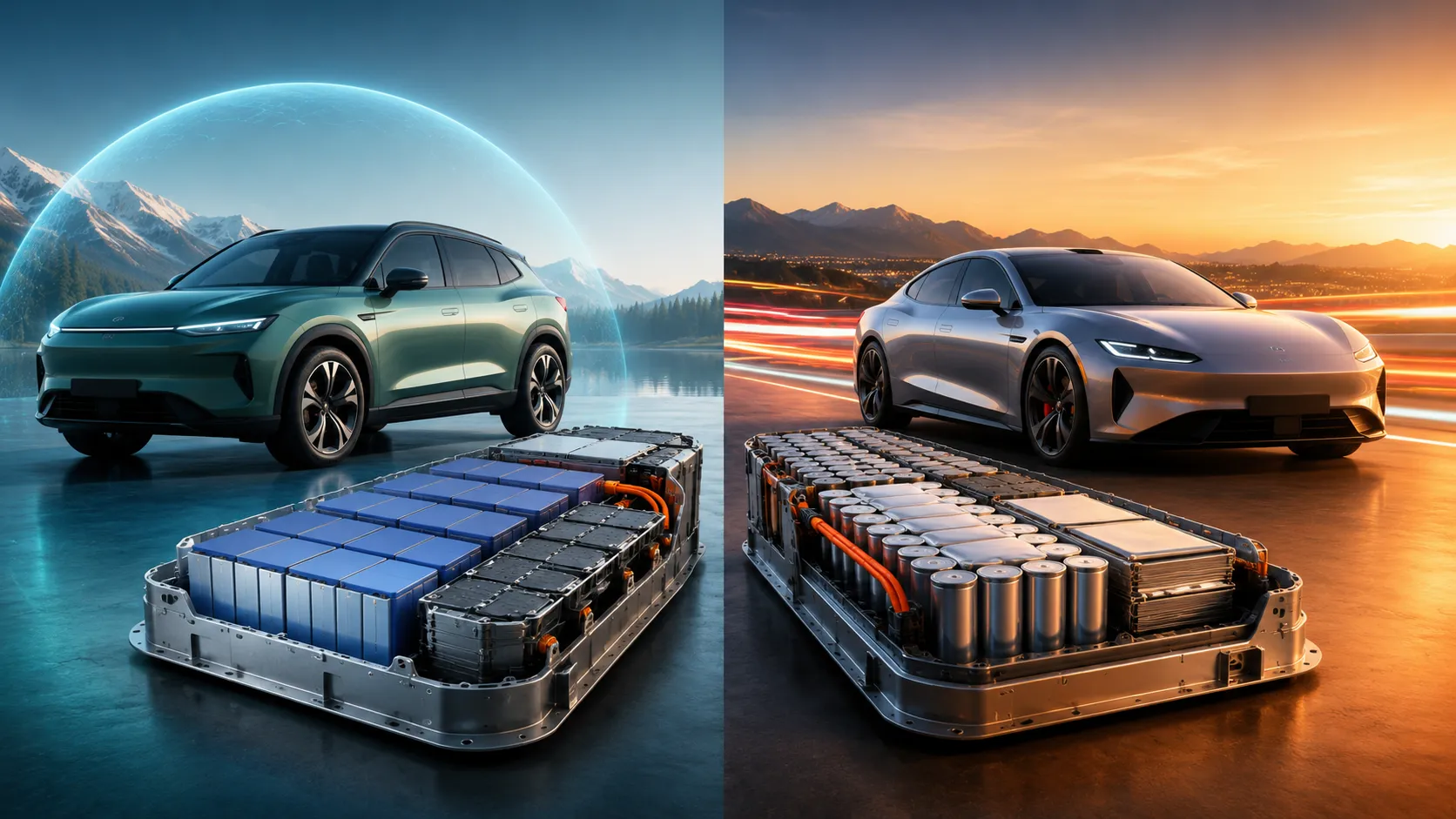
If you’re shopping for an electric vehicle, the battery chemistry hidden beneath the floor determines how you’ll charge, drive, and maintain the car for years. The choice between lfp vs nmc battery technology affects daily charging limits, cold-weather range, and even long-term safety. While both are lithium-ion, they behave very differently.
Think of LFP as the workhorse: durable, safe, and easier on your wallet. NMC is the athlete: lightweight, energy-dense, and tuned for performance and range. This guide cuts through the confusion so you can pick the right chemistry—or simply understand what’s already in your car.
LFP vs. NMC: The Quick Comparison
LFP is the marathon runner—it lasts longer, stays cooler, and costs less. NMC is the sprinter—it packs more energy per pound and delivers longer driving range. The table below lays out the differences at a glance.
| Characteristic | LFP (Lithium Iron Phosphate) | NMC (Nickel Manganese Cobalt) |
|---|---|---|
| Energy Density | Lower; heavier pack for same range | Higher; more miles per kilogram |
| Lifespan (Cycles) | 3,000–5,000+ cycles to 80% capacity | 800–1,500 cycles to 80% capacity |
| Safety (Thermal Stability) | Very stable; low risk of thermal runaway | Requires robust thermal management |
| Cost | Less expensive; iron and phosphate | Pricier; uses cobalt and nickel |
| Daily Charging Habit | Charge to 100% regularly (BMS calibration) | Limit to 80–90% for daily use |
| Cold Weather Performance | More range loss; slower cold-weather charging | Better cold tolerance; less range loss |
| Best For | City driving, long-term ownership, budget | Long trips, cold climates, maximum range |
Note: Actual range, charging speeds, and longevity depend on vehicle model, climate, and charging habits. Always verify specifics with the manufacturer.
Quick Pros and Cons
- LFP pros: Lower cost, better durability, safer chemistry, full-charge flexibility. Cons: Heavier, lower energy density, more affected by cold.
- NMC pros: Longer range, lighter weight, strong cold-weather performance. Cons: Higher cost, shorter cycle life, best kept below full charge daily.
Charging Habits: The 100% vs. 80% Rule
If you drive an LFP-equipped EV, charging to 100% is not only safe—it’s recommended for the BMS. For NMC batteries, capping at around 80% for daily use significantly extends pack life.
Why LFP batteries love a full charge
LFP cells have a remarkably flat voltage curve. The battery management system (BMS) needs a clear voltage reference to accurately estimate State of Charge (SOC). Without regular 100% charges, the BMS can drift, leading to misleading range estimates and underutilized capacity. Tesla, for instance, suggests setting the charge limit to 100% at least once a week for LFP-equipped vehicles like the Model 3 RWD. This isn’t about battery health alone—it’s about keeping the car’s brain reliably calibrated. If you own an EV with an LFP pack, treat the full charge as routine maintenance, not a stress event. For a deeper look at how the BMS orchestrates charging, see our article on battery management systems.
Why NMC batteries prefer the “80% limit”
NMC chemistry sits at a higher voltage when fully charged. Keeping the pack at that elevated voltage for long periods accelerates side reactions that degrade the cathode, eating into capacity over time. Automakers often recommend an 80–90% daily charging limit for NMC-powered cars, reserving 100% for long trips. The difference in degradation is tangible: dozens of miles of range preserved over several years. While the BMS still protects the pack, lowering the charge ceiling reduces stress. It’s not that NMC can’t be charged fully—it’s that you shouldn’t let it sit full every night if you want maximum lifespan.
Range and Performance: Energy Density Explained
NMC batteries hold more energy in a smaller, lighter package, which directly translates into longer driving ranges and often sharper acceleration. LFP’s lower energy density means the same range requires a heavier battery, and that weight penalty influences everything from handling to efficiency.
In practical terms, a Tesla Model 3 RWD with an LFP pack might weigh a couple hundred pounds more than an NMC-powered Long Range variant, despite offering less range. That extra mass can make the car feel slightly less agile and increase energy consumption per mile. For drivers who rarely venture beyond city limits, the trade-off is barely noticeable. But if you chase maximum range or enjoy spirited driving, the denser NMC chemistry is the engineering choice behind most “Long Range” badges. This density advantage also explains why performance-oriented EVs almost exclusively use NMC—or its high-nickel derivatives—in their lithium-ion battery packs. It’s one of the most consequential design decisions an automaker makes.
Winter Woes: How Cold Weather Affects LFP and NMC
In freezing temperatures, LFP batteries generally suffer more range loss—sometimes 20–30%—and slower fast-charging speeds compared to NMC. Preconditioning the battery before plugging in helps, but LFP remains more temperature-sensitive.
The chemistry behind this is straightforward. LFP’s lower ionic conductivity increases internal resistance when the mercury drops, so less energy can be extracted and accepted quickly. NMC, with its higher nominal voltage and cathode structure, manages cold weather somewhat better, though no lithium-ion battery loves the cold. Without active thermal management, charging an LFP pack at a frozen 10°F can be painfully slow. Most modern EVs address this with heat pumps and battery preconditioning—triggered by navigating to a fast charger—which warm the cells to an optimal temperature before charging begins. If you live where winters bite hard, expect more planning with an LFP car. NMC-powered vehicles give you a bit more range buffer and faster charger turnarounds when the thermometer sinks.
Safety and Lifespan: Which Battery Lasts Longer?
LFP offers superior thermal stability and a longer cycle life, often outlasting the car itself. NMC is still engineered to be safe, but it demands more careful thermal oversight to prevent rare overheating events.
Thermal Stability: The fire safety factor
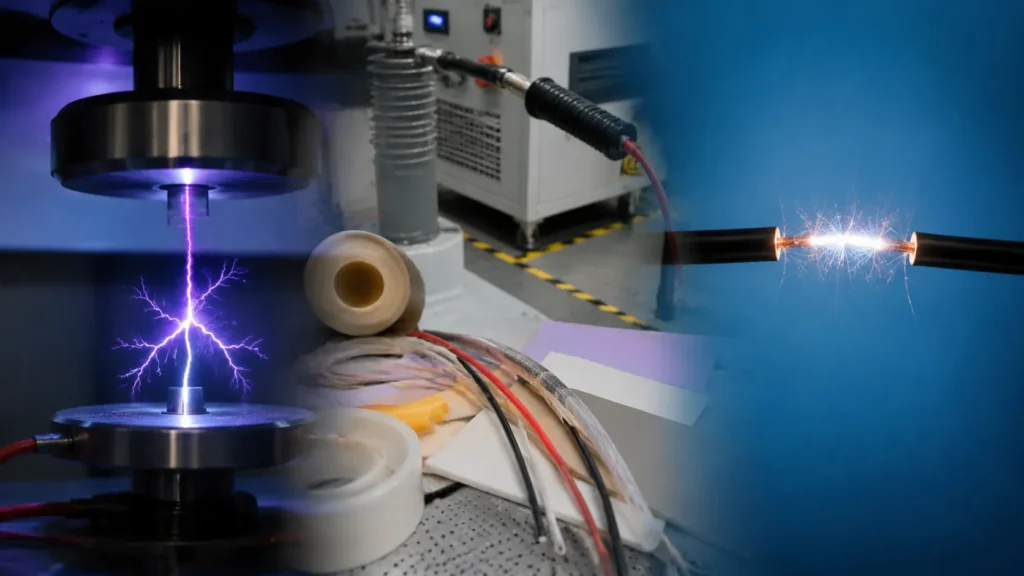
LFP’s cathode material resists oxygen release even under abuse. That makes thermal runaway—the self-heating cascade that can lead to battery fires—far less likely. In destructive testing, LFP cells can tolerate punctures and overcharge conditions without erupting into flames. NMC, on the other hand, contains cobalt oxide that can decompose at high temperatures, releasing oxygen that fuels a fire. Automakers layer sophisticated battery management systems (BMS) and cooling systems around NMC packs to keep them in the safe zone, and statistically, EV fires are extremely rare across both chemistries. But if safety is your top anxiety, LFP has an inherent edge that no amount of engineering can completely replicate.
Cycle Life: Will the battery outlast the car?
Cycle life is where LFP truly separates itself. Where a typical NMC pack might reach 800–1,500 full cycles before dropping to 80% capacity, LFP often surpasses 3,000 cycles and can push toward 5,000 under gentle use. That could mean well over 500,000 miles—far beyond the service life of most vehicles. NMC degradation is still gradual, but if you plan to keep your car for a decade or more, LFP’s longevity directly lowers the battery lifecycle cost. For consumers who worry about resale value or expensive pack replacements years down the road, understanding this difference is essential.
The Verdict: Which Battery Should You Choose?
The right battery isn’t universally better; it depends on your driving life. Use your habits as a filter.
Choose LFP if:
- Your daily routine revolves around city or suburban commutes, and you rarely exceed 200 miles in a day.
- You plan to keep your car for 8–10+ years and care more about long-term durability than maximum single-charge range.
- Budget matters—LFP-equipped models often cost thousands less upfront.
- Peace of mind around fire safety is a high priority, and you’re okay with slightly lower cold-weather capability.
Choose NMC if:
- You regularly take road trips and need every available mile of range.
- You live in a cold climate where winter range loss hits harder.
- Performance, handling agility, or quicker acceleration are what get you excited about driving.
- You’re willing to follow the 80% daily charge rule in exchange for higher energy density.
In many lineups, the choice is made for you: the base model often comes with LFP, while the extended-range or performance trims carry NMC. There’s no wrong answer, just different engineering compromises.
Finding the Right EV for Your Lifestyle
If you already own an EV, the easiest way to confirm your battery type is to check the owner’s manual or the in-car charging screen. In a Tesla, for example, a “Daily” charge limit of 100% usually indicates LFP, whereas an 80–90% recommendation points to NMC.
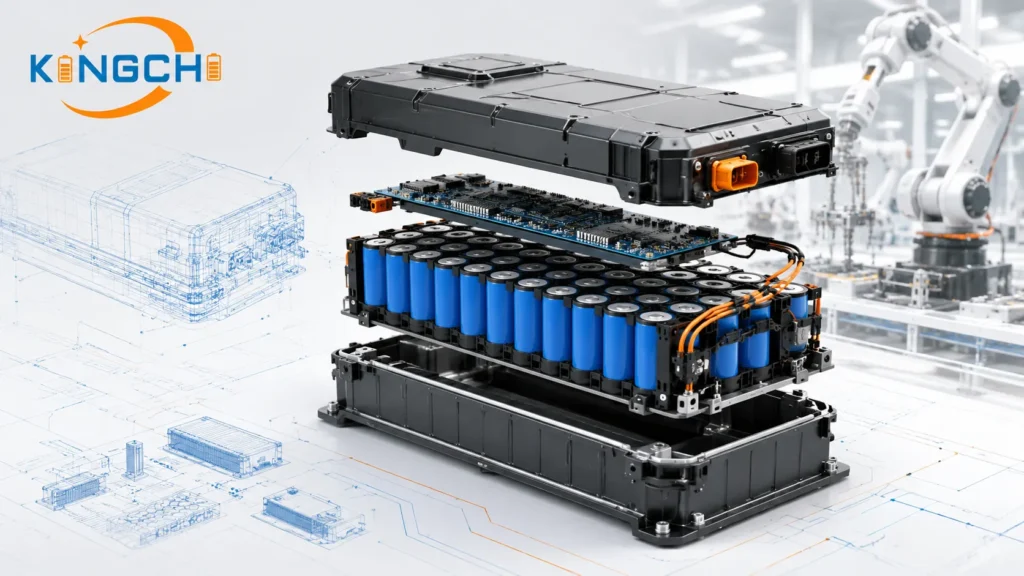
At Kingchi, we design lithium battery packs for diverse applications, and we know that chemistry choice ripples through every owner’s experience. Whether you’re comparing vehicles or considering a custom battery pack design for a specialty project, understanding the LFP-vs-NMC trade-offs puts better decisions in your hands. If you want to explore how battery lifespan shapes total ownership cost, our guide on battery lifecycle cost is a great next read.
Frequently Asked Questions
How do I know if my Tesla has an LFP or NMC battery?
Open the charging menu on the touchscreen. If the daily charge limit label shows 100%, you likely have an LFP battery. If it displays 80–90% as the recommended daily limit, you have an NMC pack. You can also check the vehicle’s specifications under the “Additional Vehicle Information” menu.
Is LFP cheaper than NMC?
Yes. LFP uses iron and phosphate, both abundant and inexpensive, while NMC relies on cobalt and nickel, which carry higher raw material costs. This typically makes LFP-powered vehicles thousands of dollars cheaper at the point of sale.
Can I fast-charge LFP batteries?
Absolutely. LFP batteries accept fast charging, but their charge rate may slow more in cold weather compared to NMC. Preconditioning the battery before a charging stop helps maintain higher speeds, especially in winter.
Does LFP battery degradation happen faster?
No. In fact, LFP degrades much more slowly. With 3,000–5,000 full cycles possible, an LFP pack can retain 80% of its capacity far longer than a typical NMC pack, often translating to hundreds of thousands of extra miles.
Frequently Asked Questions

Get a Fast, Custom Power Quote

 English
  Turkish
  Arabic