How to Choose UAV Lithium Polymer Battery Packs?- Kingchi
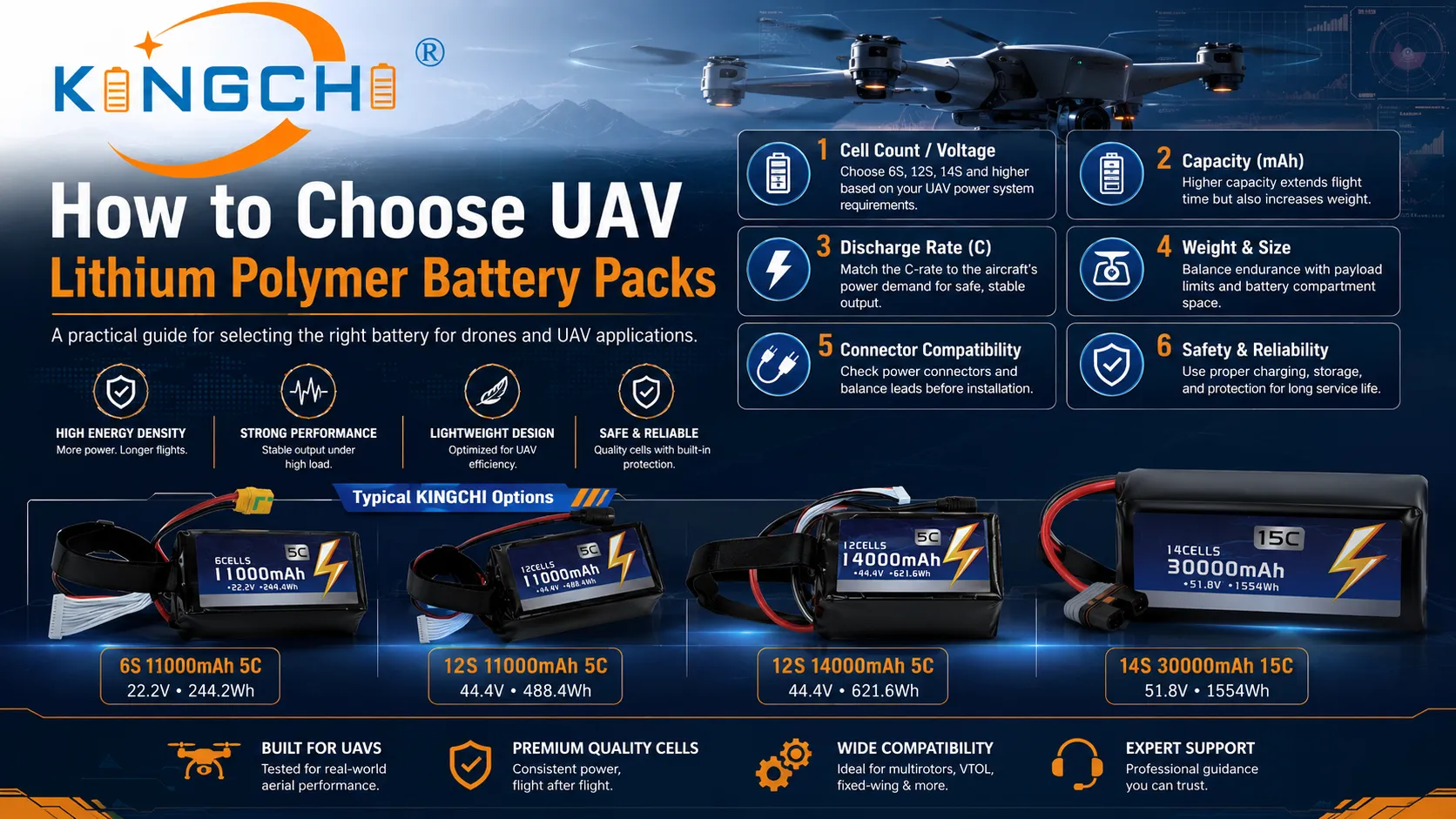
A drone is only as capable as its battery. For industrial UAVs carrying heavy payloads in agriculture, mapping, or surveillance, the uav lithium polymer battery packs are the single most critical engineering components — yet many procurement managers choose based on upfront price alone, leading to premature pack failures and high fleet downtime.
To build an economically viable drone fleet, you must balance discharge capacity, cycle life, thermal performance, and smart management electronics. This guide provides a practical engineering framework to evaluate, design, and procure commercial-grade lithium polymer (LiPo) power systems.
- Discharge Profiling: Continuous vs. peak current capability.
- Thermal Safety: Cell isolation to prevent cascading thermal events.
- Telemetry Integration: Direct smart BMS interface with the flight controller.
Why LiPo Remains the Standard for UAVs
LiPo vs. Li-ion: When to Choose Which
Industrial drone operators frequently face a tough trade-off between power delivery and flight duration. For multirotors that require instant throttle response to stabilize heavy payloads under high wind loads, a high discharge rate LiPo pack is indispensable.
Conversely, for long-endurance vertical takeoff and landing (VTOL) fixed-wing drones, lightweight drone battery modules utilizing cylindrical lithium-ion chemistry are often preferred. To help operators balance these requirements, we engineer both premium lithium battery packs for drones and highly integrated cylindrical cell modules.
| Performance Metric | Lithium Polymer (LiPo) | Lithium-ion (Li-ion) |
|---|---|---|
| Energy Density | 180 – 240 Wh/kg | 250 – 300 Wh/kg |
| Continuous Discharge | 15C – 50C continuous | 1C – 10C continuous |
| Form Factor Flexibility | Excellent (custom pouch dimensions) | Rigid (standard cylindrical sizes) |
| Cycle Life | 300 – 500 cycles (to 80% capacity) | 500 – 800 cycles (to 80% capacity) |
| Thermal Resistance | Moderate (needs active cooling at high C-rates) | High (prone to localized heating) |
Data sources: Kingchi R&D internal electrochemical cycle testing (2025) and comparative battery chemistry standard sheets.
Understanding C-Rating, Capacity (mAh) and Voltage (S)
The total capacity of a cell, measured in milliampere-hours (mAh), dictates the total energy reservoir, but voltage and discharge current determine the raw work output. A 12S configuration (44.4V nominal) operating at high currents reduces overall power transmission losses ($I^2R$ heating) compared to low-voltage, high-current alternatives.
When evaluating a high discharge rate LiPo for drones, the continuous C-rating indicates the maximum safe current the pack can sustain without exceeding its thermal limit. We recommend keeping continuous operating current below 60% of the manufacturer’s declared C-rating to prevent premature degradation.
- 6S Configuration (22.2V): Best for mid-sized mapping and surveillance quadcopters.
- 12S Configuration (44.4V): Standard for industrial crop spraying and heavier utility drones.
- 14S Configuration (51.8V): Best for heavy-lift logistics platforms carrying maximum weight payloads.
The Role of Smart BMS in Modern LiPo Packs
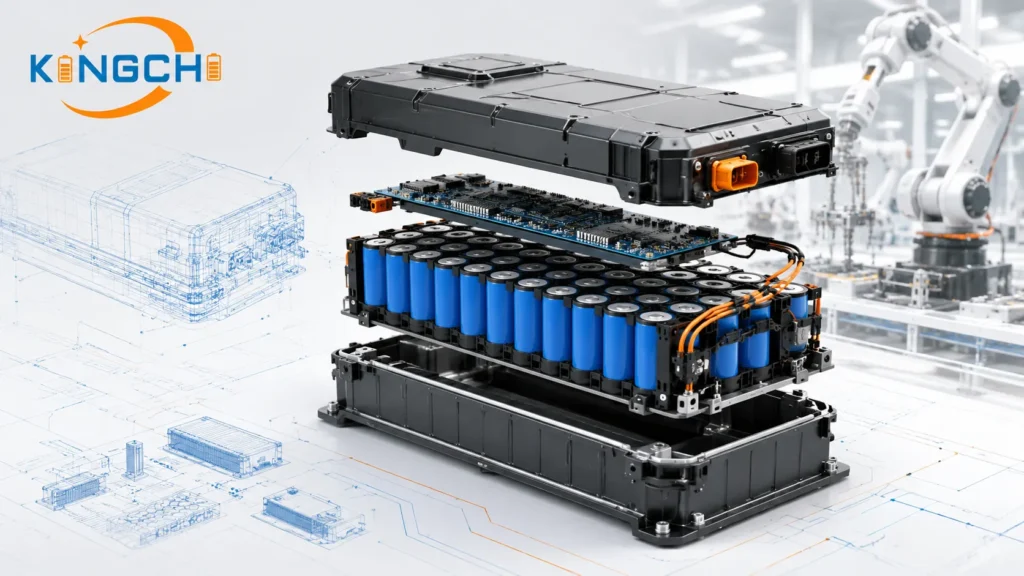
Passive LiPo packs lack internal safety mechanisms, shifting the entire responsibility of system protection to external telemetry or operator diligence. Implementing smart drone battery management integrated directly into the housing changes this equation.
A smart BMS continuously monitors individual cell voltages, pack temperature, and current draws, communicating this telemetry directly to the flight controller over CAN bus or SMBus. For long-term logistics, our smart electronics feature automated self-discharge to storage voltage (3.85V per cell) after a period of inactivity. This is a critical feature to avoid swelling during warehouse storage.
- Over-current Protection: Prevents fire during motor stalls or short-circuits.
- Automatic Balance Charging: Matches voltages during smart drone battery charging cycles.
- Thermal Cutoff: Disables charge/discharge if temperatures exceed 65°C.
Top Applications for UAV LiPo Packs
Agricultural Spraying & Crop Monitoring
Agricultural operations require heavy-lift capabilities to carry up to 30–50 liters of chemical payloads. This dynamic load demands sudden burst current during maneuvers and high continuous power to run heavy pressure pumps, making agricultural UAV power solutions highly specialized.
For these high-duty-cycle tasks, we construct packs like our high-capacity 51.8V 30000mAh drone battery with thick nickel busbars and heavy copper terminal tabs to handle the high heat generation. This engineering choice prevents terminal desoldering under maximum workload.
- IP-Rated Enclosures: Protects cells from chemical spray and dust penetration.
- Reinforced Casings: Absorbs physical impacts from rough field landings.
- High-Current Connectors: Uses anti-spark AS150 or XT90-S connectors.
Aerial Mapping & Surveying
In mapping and surveying, the flight controller needs a stable voltage supply to maintain constant altitude for accurate photogrammetry. While weight must be minimized to maximize flight times, the physical battery must withstand physical impact and vibration.
We often recommend a balanced 22.2V 11000mAh drone battery or custom-designed mid-voltage LiPo packs that balance payload capacity with aerodynamic profile.
Cargo Delivery & Logistics
Logistics drones frequently perform rapid takeoffs with heavy payloads, placing extreme current strain on the electrical drivetrain. The battery pack must sustain high continuous current for the transit duration without sagging below critical operating voltage levels.
We build high-capacity, multi-pack modules utilizing structural adhesives to ensure physical rigidity under sudden force changes during automated cargo drop-offs.
- Vibration Isolation: Shock-absorbing silicon mounts prevent internal tab wear.
- Parallel Pack Linking: Ensures voltage redundancy during long flights.
- Active Temperature Regulation: Maintains optimal performance in cold climates.
Surveillance & Security
For defense, security, and long-range surveillance, reliability in cold climates and rapid deployment are the top priorities. Under extreme cold, electrolyte mobility decreases, resulting in voltage sag and reduced flight time.
Our military-grade drone battery packs are engineered with internal thermal heaters that pre-warm the pack to optimal operational temperatures before takeoff. Learn more about aerospace battery suppliers and design requirements.
Key Safety & Certification Standards
UN38.3, UL, and CE: What They Mean for Your Fleet
Operating an industrial UAV fleet legally and safely requires compliance with strict international testing standards. Purchasing non-certified packs risks costly shipping liabilities and operational bans in regulated airspace.
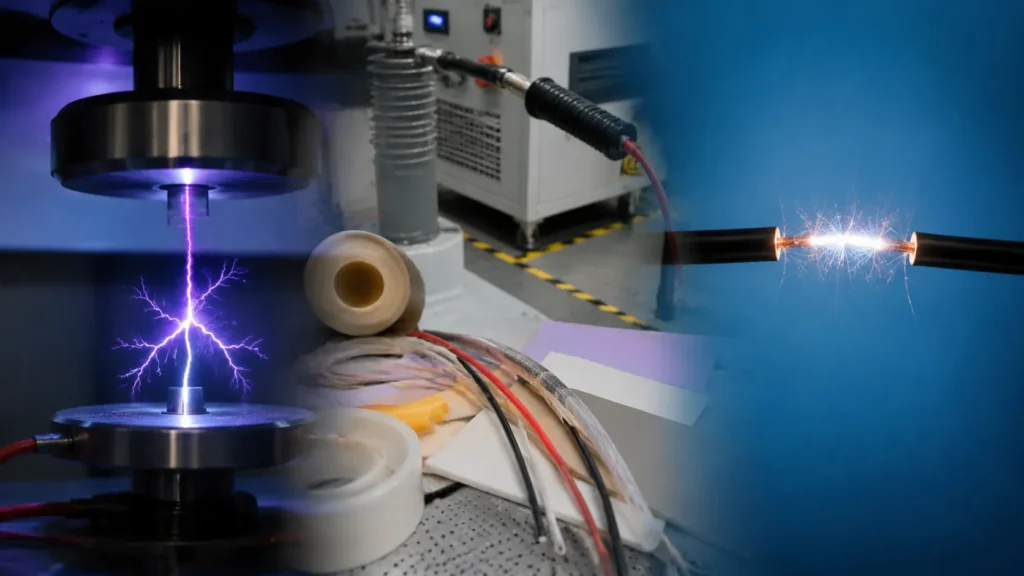
The UN38.3 standard certifies that battery packs can safely undergo thermal testing, vibration, shock, short circuits, and overcharge during transport. In addition, CE and UL 2054 standards certify electrical safety, reassuring procurement managers that the product won’t hazard their equipment.
- UN38.3: Crucial for commercial air cargo compliance.
- UL 2054: Evaluates cell endurance under physical stress and electrical abuse.
- CE Certification: Verifies electromagnetic compatibility with nearby receivers and drone electronics.
Preventing Thermal Runaway in High-Discharge Packs
Thermal runaway occurs when internal cell defects, physical puncture, or excessive over-discharge leads to an unstoppable exothermic reaction. We prevent this at the cell level by selecting pure, highly-refined chemical raw materials and thick internal separators.
At the pack level, our physical design isolates cells with fire-retardant barriers, ensuring that if a single cell fails, the thermal event is contained. You can explore our UAV battery solutions designed with phase-change thermal absorption materials.
Comparing Top LiPo Pack Suppliers: Tattu, Grepow, MaxAmps, EaglePicher & Kingchi
Selecting the right battery vendor requires evaluating several critical factors, including custom engineering capabilities, lead times, warranties, and production MOQs. For B2B procurement managers, choosing a supplier who controls the cell manufacturing process directly represents a huge advantage.
We have compiled a side-by-side comparison of the leading UAV battery providers in the market to highlight where each supplier excels and where their limitations lie.
| Supplier | Core Focus | Customization Support | Typical MOQ (B2B) | Warranty Period | Manufacturing Base |
|---|---|---|---|---|---|
| Tattu (Grepow) | Premium agricultural & commercial packs | Available for enterprise clients | 100 units | 6 months | China (Shenzhen) |
| MaxAmps | High-end hobbyist & custom builds | Highly customizable (connectors/leads) | No minimum | Lifetime (limited) | United States |
| EaglePicher | Defense, aerospace & space exploration | Fully custom military design | Large volume contract | Case-by-case | United States |
| Kingchi | Industrial UAV & custom power systems | Full custom design (BMS, shell, cell) | 50 units | 12 to 24 months | China (Shenzhen) |
Data sources: Public technical specifications, corporate catalogs (2025), and direct industry pricing requests.
- Tattu (Grepow): Industry benchmark for standardized industrial packs.
- MaxAmps: Excellent for small-scale testing requiring US-assembled units.
- EaglePicher: Matchless for defense contracts requiring radiation-hardened cells.
- Kingchi: Best balanced partner for high-volume custom production and fleet supply.
Designing a Custom UAV LiPo Pack: 5 Steps for B2B Buyers
If a standard off-the-shelf pack does not meet your drone’s structural envelope or payload demand, custom engineering is necessary. Below is the step-by-step engineering process we use with our B2B clients to design a bespoke custom UAV battery pack.
- Step 1: Define Mission Profile – Establish the average hover current draw, max climbing current, payload mass, and target flight time to determine the pack’s minimal capacity and C-rate.
- Step 2: Choose Cell Chemistry – Determine whether high-discharge LiPo, standard Li-ion, or semi-solid state cells provide the best power-to-weight ratio. Read about lithium ion cells for UAVs to weigh energy density versus burst performance.
- Step 3: Specify Voltage (S) and Capacity (mAh) – Select the series cell configuration to match your electronic speed controller (ESC) limits and total energy requirements.
- Step 4: Select Connector Type and Wiring Harness – Choose high-current, spark-preventing connectors like AS150 or XT90 anti-spark configurations to safely carry the current load without thermal degradation.
- Step 5: Prototype Testing and Cycle-Life Validation – Manufacture small prototype batches to run accelerated aging tests, thermal imaging, and vibration analysis before mass production.
During custom development, we prioritize physical impact resistance by wrapping the cell group in high-density fiberglass sheets before shrinking the outer PVC layer. For more details, consult our technical resource on specifying UAV battery packs for specialized commercial operations.

Beyond the Price Tag: Calculating TCO for UAV LiPo Packs
Buying cheaper, non-branded LiPo packs is an expensive mistake for industrial operators. High internal resistance leads to high heat, which quickly degrades the cells and halves their cycle life, doubling your long-term replacement frequency.
To illustrate this, we must compare the total cost of ownership (TCO) over 12 months for a fleet running 10 heavy agricultural drones with three different batteries. Let’s look at the financial impact of cycle-life limits and early pack degradation.
| Cost Factor | Low-Cost Pack (Non-Branded) | Standard Brand Pack | Kingchi Smart Pack |
|---|---|---|---|
| Unit Cost (12S 16000mAh) | $150 | $250 | $320 |
| Expected Cycle Life | 150 cycles | 300 cycles | 450 cycles |
| Annual Pack Consumption (per drone) | 6 packs | 3 packs | 2 packs |
| Annual Cost per Drone | $900 | $750 | $640 |
| Fleet Cost (10 Drones / Year) | $9,000 | $7,500 | $6,400 |
| Estimated Downtime/Failure Cost | $1,500 (high failure rate) | $300 (low failure rate) | $0 (smart BMS warnings) |
| Total 1-Year TCO | $10,500 | $7,800 | $6,400 |
Data sources: Comparative calculations based on a simulated fleet operation performing 900 flight hours annually under standardized load conditions.
- Low-Cost Packs: Suffer from rapid voltage sag after 50-70 flights.
- Standard Brands: Perform reliably but lack the active cell monitoring needed to prevent over-discharge.
- Kingchi Smart Packs: Prevent costly operator errors with intelligent BMS cell cutoffs, preserving pack life.
Frequently Asked Questions
What is the difference between a 35C and 45C LiPo pack for UAVs?
C-rating indicates continuous discharge rate. A 45C pack delivers higher burst current, essential for heavy-lift drones during takeoff and abrupt maneuvers. For steady-state mapping or low-wind flight, a 35C pack is sufficient and usually runs cooler.
Can I use Li-ion batteries instead of LiPo for my agricultural drone?
Yes, if your drone has a low discharge requirement, typically under 15C. However, most agricultural drones carry heavy spray systems that require massive burst power for pumps and high-torque maneuvers. Li-ion cells generally cannot sustain these high bursts and may overheat, making LiPo the safer choice.
How do I safely transport LiPo packs for my drone fleet?
All commercial LiPo packs must be shipped under UN38.3 certification rules to comply with airline and cargo freight laws. For ground transport, keep them stored at a storage voltage of 3.8V to 3.85V per cell inside a fire-retardant container. Our smart battery management systems automatically discharge to this safe level after a set period of non-use.
What is the typical lead time for a custom LiPo pack order?
Standard custom orders containing 100 to 500 units typically take 4 to 6 weeks from technical sign-off to delivery. For qualified B2B customers, Kingchi can produce functional prototypes within 2 weeks. This accelerated timeline helps drone designers complete critical test flights on schedule.
Do you offer batteries with integrated smart BMS?
Yes, we construct custom packs with our proprietary smart BMS technology, supporting real-time data transmission over CAN bus, SMBus, or I2C. This allows flight controllers to continuously monitor critical cell health, cycle counts, and real-time temperatures during operation.
What warranty do you provide on UAV LiPo packs?
We provide a standard 12-month warranty against any manufacturing and material defects on all commercial-grade battery packs. For qualified fleet customers, we also offer extended 24-month service agreements that cover scheduled health-checks and replacement cycling.
Frequently Asked Questions

Get a Fast, Custom Power Quote


 English
  Turkish
  Arabic