Why Li-Ion Battery Chemistry Is Unsustainable? B2B Strategy
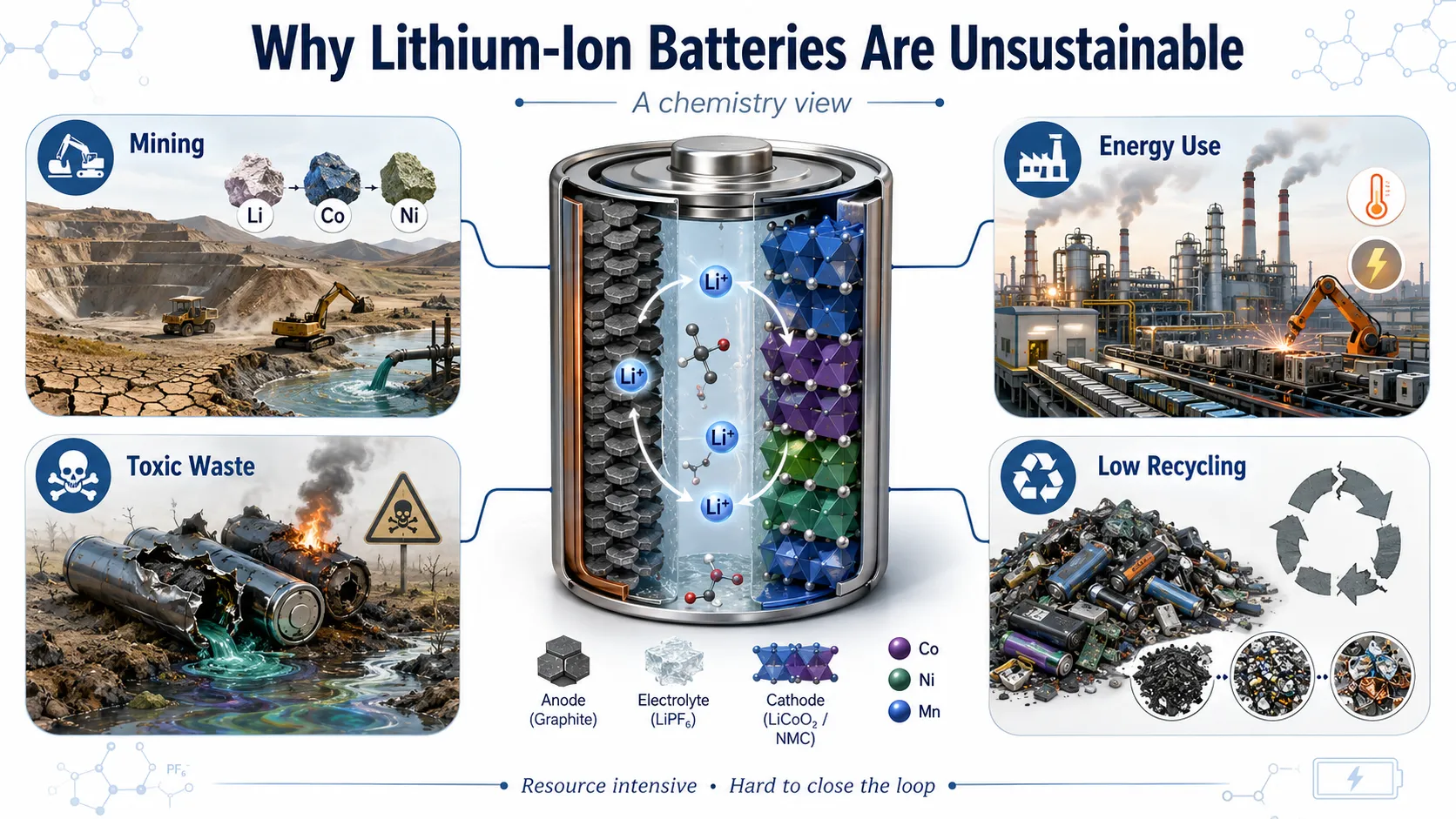
When a commercial storage system sheds 20% of its usable capacity within three years, the root cause isn’t a manufacturing flaw—it’s the unavoidable chemical fatigue built into every lithium-ion cell. For procurement managers and ESG compliance officers, the question of chemistry why are lithium ion batteries unsustainable isn’t abstract. It dictates whether an asset performs reliably over a decade or becomes a liability on the balance sheet long before its projected end-of-life.
Most lifecycle assessments overlook what happens at the atomic level. We focus on cell-level degradation because that’s where operational risk, replacement cost, and Scope 3 carbon accounting truly diverge from brochure claims. The numbers you need are in the chemistry, not the marketing collateral.
The Electrochemical Reality: Chemistry Why Are Lithium Ion Batteries Unsustainable in the Long Term?
Engineering takeaway: Lithium-ion batteries degrade irreversibly because intercalation chemistry mechanically fatigues cathode and anode structures during every charge-discharge cycle. This isn’t a fixable defect—it’s a thermodynamic inevitability that limits practical cycle life well below theoretical maximums, especially under real-world temperature and depth-of-discharge conditions.
The Thermodynamics of Active Materials and Structural Stress
When lithium ions shuttle between the cathode and anode, the host materials expand and contract by 3–7% depending on the cathode chemistry. In layered oxide structures like NMC, this repetitive volume change causes microcracking at grain boundaries. Over several hundred cycles, those cracks disconnect active material particles from the conductive network, directly raising internal resistance and reducing capacity. The problem accelerates under high charge rates, where uneven lithium concentration gradients create localized stress hotspots. We’ve seen cells operated at 1C in 40°C ambient lose twice the capacity over 500 cycles compared to 25°C lab conditions.
Parasitic Side Reactions and Solid Electrolyte Interphase (SEI) Growth
The solid electrolyte interphase forms on the anode during the first charge. It’s necessary, but it’s also a permanent consumer of active lithium. Throughout cycling, the SEI thickens slowly as electrolyte solvents reduce at the anode surface. Each molecule of electrolyte consumed traps lithium ions that can no longer participate in energy storage. In graphite-anode cells, SEI growth alone can account for 10–15% of irreversible capacity loss over the battery’s lifetime. The kinetics worsen with temperature: at 50°C, the rate of lithium inventory loss from side reactions can triple compared to room temperature. That’s why we caution buyers to interrogate aging data that doesn’t include temperature stress profiles.
Dendrite Formation and Internal Short Circuit Risks
Under fast charging, low-temperature operation, or electrode manufacturing inconsistencies, lithium metal can plate unevenly on the anode instead of intercalating. This initiates dendrite formation—needle-like metallic growths that can pierce through the separator and cause micro-shorts. Even if a dendrite doesn’t trigger immediate thermal runaway, it creates a localized hotspot that accelerates SEI decomposition and electrolyte dry-out. In our risk evaluations for commercial energy storage systems (BESS), dendrite-related degradation is the hardest variable to model because it depends on manufacturing quality, operational history, and the specific BMS’s charge algorithm.
- Microcracking reduces active cathode surface area, progressively shrinking discharge capacity.
- SEI growth consumes active lithium irreversibly; every mAh lost to side reactions is gone permanently.
- Dendrites create partial shorts that drain the cell slowly while increasing self-heating during rest periods.
- Uneven current distribution across large-format cells amplifies all three failure modes.
Upstream Environmental Footprints: Sourcing and Processing Chemistry
Decision rule: The raw material extraction and refining phase for lithium, nickel, and cobalt contributes up to 40% of a battery’s total cradle-to-gate carbon footprint. When buyers evaluate ESG risk, the chemical process behind the active materials often outweighs cell manufacturing impacts.
The Chemical Intensity of Lithium Extraction (Brine vs. Hard Rock)
Brine extraction in South America’s “Lithium Triangle” evaporates saline groundwater over 12–24 months, consuming roughly 2,000 liters of water per kilogram of lithium carbonate equivalent. That directly competes with local freshwater supplies in arid zones. Hard rock mining of spodumene requires crushing, roasting at 1,100°C, and sulfuric acid digestion—energy inputs that can push the carbon footprint to 15 kg CO₂e per kg of lithium hydroxide. The chemical process choice matters: a lifecycle assessment (LCA) for a 100 MWh BESS will differ by hundreds of metric tons of CO₂e depending on whether the lithium came from solar-evaporated brine or coal-fired hard rock processing.
High-Temperature Pyrometallurgical Refining of Cathode Materials
Producing high‑nickel NMC cathodes demands multiple calcination steps above 800°C in oxygen-rich furnaces. The process also requires precursor co-precipitation using metal sulfates derived via pyrometallurgical extraction from laterite or sulfide ores. For every ton of nickel sulfate produced from laterites, smelting generates sulfur dioxide emissions and slag waste. While some facilities capture SO₂ for sulfuric acid production, many smaller operations in Southeast Asia do not. Procurement teams should verify energy-source declarations from cathode precursor suppliers—coal-powered calcination can double the upstream carbon load compared to a grid‑averaging 200 g CO₂/kWh.
Acid Leaching and Chemical Byproduct Disposal Challenges
After pyrometallurgical concentration, many refiners use high-pressure acid leaching (HPAL) to dissolve nickel and cobalt from laterite ores. The tailings contain heavy metals and sulfates, requiring long-term containment in tailings dams. Pipeline transport of acidic slurries to deep-sea disposal—practiced in some regions—poses severe seabed toxicity risks. Hydrometallurgical recycling faces a similar waste issue: it recovers metal salts but creates aqueous waste streams that need costly neutralization. Buyers mapping Scope 3 emissions should request mass balance data for chemical reagents and waste disposal pathways, not just finished cell specifications.
- Brine evaporation consumes 1–2 million liters of water per metric ton of lithium carbonate, straining desert hydrology.
- Hard rock spodumene refining uses sulfuric acid roasting, producing sodium sulfate waste.
- Laterite nickel HPAL generates ammonium sulfate effluents that can contaminate marine ecosystems.
- Cobalt refining often involves ammonia-based leaching; uncontrolled releases create local air pollution.
The Human and Ethical Cost of Cathode Chemistries
Buyer warning: Cobalt sourcing from artisanal mines in the Democratic Republic of Congo carries well-documented human rights risks, while nickel refining capacity remains geopolitically concentrated in China and Indonesia. These factors create supply chain compliance liabilities that can affect enterprise ESG ratings and import eligibility.
Artisanal Cobalt Sourcing and Supply Chain Audits
Artisanal and small-scale mining supplies 15–30% of the DRC’s cobalt output, often with no formal mechanization, safety protocols, or child labor protections. Even industrial miners blend artisanal ore into their supply streams, making full segregation difficult. For corporate buyers of lithium battery packs, tracing cobalt back to mine-of-origin requires rigorous chain-of-custody documentation and smelter audits. We advise incorporating OECD Due Diligence Guidance requirements directly into RFQ terms—and reserving the right to conduct third-party audits if supplier declarations look incomplete.
Geopolitical Consolidation of Chemical Refining Infrastructure
Over 70% of global lithium‑ion cell manufacturing passes through Chinese refining facilities for cathode precursors, lithium hydroxide, and electrolyte salts. Indonesia has rapidly expanded its nickel processing capacity, leveraging domestic ore export bans to attract Chinese investment. This consolidation creates supply chain vulnerability: a single regulatory shift, export restriction, or trade dispute can delay shipments of battery‑grade chemicals across all chemistries. Diversifying cell procurement to include LFP chemistries reduces cobalt dependency, but it doesn’t eliminate the lithium refining bottleneck.
Nickel Mining and Marine/Riverine Tailings Disposal
In Indonesia and the Philippines, nickel laterite mining can cause sedimentation runoff that smothers coral reefs and disrupts coastal fisheries. Some operations discharge tailings directly into river systems through submarine pipelines, impacting benthic ecosystems. ESG reporting frameworks increasingly require biodiversity impact disclosures for nickel supply chains. That’s a material risk for companies using Nickel-Manganese-Cobalt (NMC) chemistries in commercial fleet vehicles or grid batteries.
Downstream Sustainability Issues: E-Waste and Recyclability Gaps
What to verify: Globally, less than 5% of lithium-ion batteries are recycled. The economic gap between recycling cost and virgin material prices, combined with extreme pack design variability, makes large-scale chemical recovery unviable without regulation or subsidies.
Why Current Li-ion Battery Recycling is Chemically and Economically Inefficient
Lithium-ion packs contain multiple cell formats, cathode chemistries, and module architectures, each requiring different disassembly and separation protocols. Automated plants struggle to handle the diversity, so manual breaking is still common—creating worker safety hazards and inconsistent output streams. The lithium recovery rate in many pyrometallurgical extraction smelters is near zero because lithium reports to slag. Hydrometallurgical routes, adept at hydrometallurgical recycling, recover cobalt and nickel profitably but struggle with lithium, manganese, and iron, whose oxide precipitates require extra purification. As a result, the business case for recycling a mixed-stream container of end-of-life packs rarely closes without gate fees or regulatory mandates.
Pyrometallurgy vs. Hydrometallurgy: Environmental Trade-offs
| Process | Best For | Environmental Drawback | Lithium Recovery |
|---|---|---|---|
| Pyrometallurgy | Co, Ni recovery from mixed chemistry feeds | High CO₂ emissions, HF gas generation | Near zero |
| Hydrometallurgy | High-purity metal salt recovery | Acidic effluents and high water usage | 40–70% (evolving) |
| Direct Recycling | Preserving cathode structure for remanufacturing | Requires sorted, single-chemistry input | Not typically recovered |
Recovery rates are process-dependent and should be verified with the recycler’s mass balance documentation; figures above reflect typical industry ranges as of 2024.
Landfill Hazards and the Mechanics of Thermal Runaway in E-Waste
When a discarded lithium-ion cell is crushed in a municipal compactor, the internal separator can tear, causing an internal short and rapid self-heating. This can cascade into thermal runaway, releasing toxic hydrogen fluoride gas and volatile organic carbonates. Waste facility fires linked to improperly disposed lithium batteries are rising sharply. For enterprises decommissioning large-format energy storage systems (BESS), end-of-life handling plans must specify certified recyclers and secure transport protocols, including UN38.3 certification for shipping damaged or end-of-life modules.
Comparing Li-ion Chemistries: LCO, NMC, and LFP
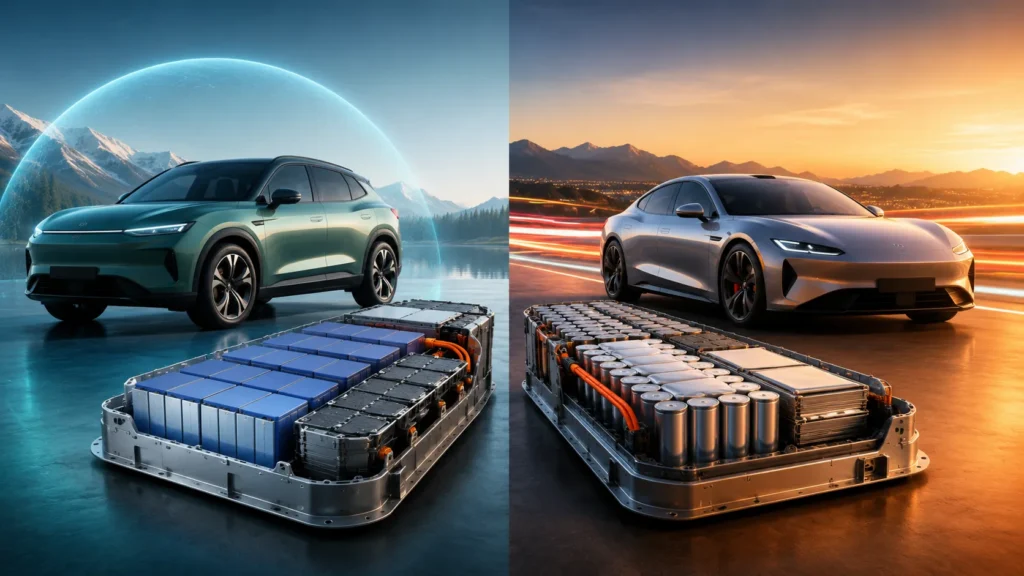
Best-fit scenario: NMC batteries deliver the high energy density that electric vehicles and space-constrained BESS need, but they incur the highest ESG risk and thermal management overhead. LFP eliminates cobalt and nickel, trading some energy density for dramatically better safety margins and a simpler supply chain.
Cobalt-Heavy NMC: Energy Density vs. ESG Liability
NMC cathodes, especially those with high nickel content (NMC 811), can reach 180–250 Wh/kg at the cell level. That’s attractive for weight-sensitive applications like commercial drone packs or automated guided vehicles relying on AGV battery packs. But every percentage point of cobalt raises the ESG due-diligence burden. Institutional investors increasingly screen for cobalt exposure, and some large battery off-takers are writing cobalt content limits directly into supply agreements.
Lithium Iron Phosphate (LFP): Lower Impact but Sourcing Bottlenecks
Lithium iron phosphate (LFP) cells operate at a lower voltage (3.2 V nominal) and settle around 120–160 Wh/kg, which often requires a larger physical footprint for the same energy capacity. The payoff: a thermal runaway onset temperature above 270°C, versus roughly 180°C for NMC. This reduces fire suppression costs in commercial BESS installations. However, LFP’s lithium iron phosphate still depends on lithium extraction. Moreover, many LFP cell manufacturers refine lithium carbonate from hard rock sources in Western Australia, which can carry a higher upfront carbon footprint than brine unless the processing plant uses renewable electricity.
Safety Profiles and Thermal Stability Differences
| Parameter | NMC (LiNiMnCoO₂) | LFP (LiFePO₄) |
|---|---|---|
| Typical cell voltage (nominal) | 3.6–3.7 V | 3.2–3.3 V |
| Specific energy (Wh/kg) | 180–250 | 120–160 |
| Thermal runaway onset | ~180°C | ~270°C |
| Cobalt/nickel supply risk | High | None |
| Recycling economic value | High Co/Ni content | Lower metal value; lithium iron phosphate recovery less established |
Data reflects typical commercial cell specifications. Buyers should request manufacturer-specific test reports for the exact model under evaluation.
Future Alternatives: Evaluating the Next-Generation Battery Pipeline
Transitioning away from lithium chemistry requires B2B operations to track the commercial readiness of alternative chemistries like sodium-ion and iron-flow batteries, which eliminate several core ESG pain points. The technology exists; it’s the supply chain scale that still lags.
Sodium-ion (Na-ion) Batteries: A Viable Low-Impact Chemistry?
Sodium-ion cells swap lithium for sodium, an element available in seawater and soda ash. The cathode chemistry typically uses Prussian white or layered oxides free of cobalt and nickel, while the anode often employs hard carbon derived from biomass. Our sodium-ion cell line demonstrates this, delivering 100–130 Wh/kg with a voltage plateau around 3.0 V. For stationary storage, where weight doesn’t drive system cost, sodium-ion can already meet 80–90% of daily cycling requirements. The real attraction is the cobalt-free alternatives promise: no artisanal mining risk, no nickel supply exposure, and a much simpler recycling stream because the chemistry avoids heavy metals entirely.
Solid-State Electrolytes: Mitigating Flammability and Enhancing Lifespan
Solid-state batteries replace the flammable organic liquid electrolyte with a ceramic or polymer separator. This design physically blocks lithium dendrite propagation and raises the thermal stability limit well above 300°C. Several pilot lines aim to reach GWh-scale production by 2027–2028, but unresolved challenges around interfacial resistance and manufacturing cost persist. For corporate buyers planning BESS procurements with a 2030 operational horizon, solid-state may become a competitive option, particularly for high-cycle-count applications where a 12,000+ cycle life would offset upfront capital.
Flow Batteries: Long-Duration Energy Storage (LDES) for Commercial Sites
Vanadium redox and emerging iron-flow batteries store energy in liquid electrolyte tanks, decoupling power from energy capacity. They offer 20,000+ cycles with no thermal runaway risk because the electrolyte is inherently aqueous and non‑flammable. The upfront cost is higher than LFP for sub‑4‑hour durations, but for 8–10‑hour LDES applications, the levelized cost can undercut lithium. Facilities requiring long backup windows or solar time-shifting should evaluate flow chemistry now; the supply chain for vanadium and iron is geographically diverse, sidestepping lithium’s geopolitical bottlenecks.
B2B Procurement Strategy: Navigating ESG Compliance and Lifecycle Asset Management
Decision rule: To mitigate the chemical unsustainability of lithium-ion systems, procurement teams must enforce supplier verification processes that track mineral origin, production energy mix, and end-of-life recycling liabilities—not just price-per-kWh.
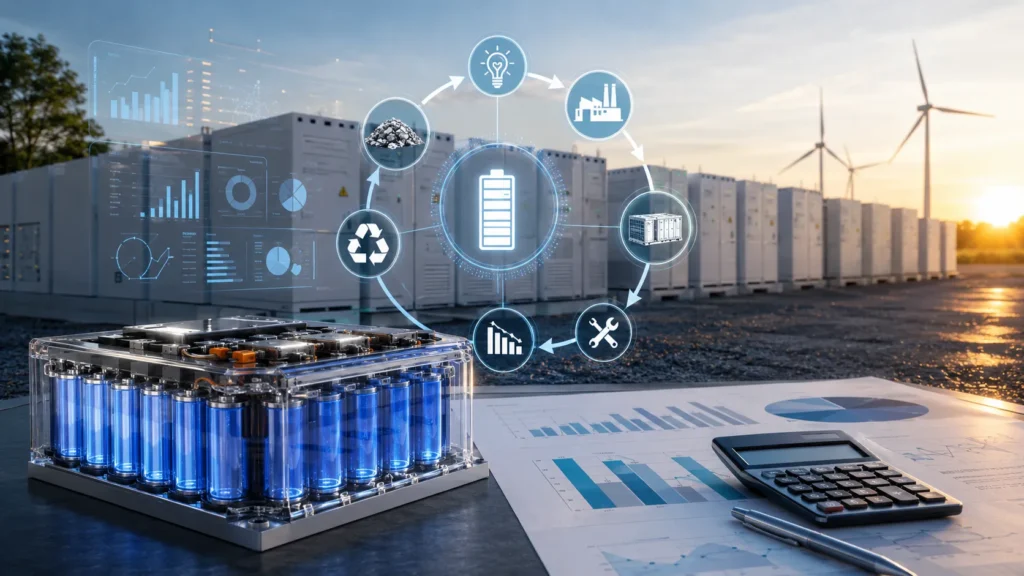
Calculating Scope 3 Emissions for Battery Systems
Scope 3 emissions from a battery purchase vary by up to 50% depending on the manufacturing plant’s grid intensity. A cell factory powered by hydroelectricity in Sichuan, China, can have half the cradle-to-gate carbon footprint of an identical factory running on a coal-heavy grid in another province. We recommend requesting an Environmental Product Declaration (EPD) or a third-party Lifecycle Assessment (LCA) that breaks out upstream material extraction, precursor refining, and cell assembly emissions. Without that granularity, corporate carbon accounting simply defaults to industry-average factors, which may overstate or understate actual liability.
Supplier Due Diligence Checklist for Chemical Sourcing
Enterprise buyers should include these verification points in vendor RFPs for custom lithium battery solutions or standard modules:
- Geographic origin of lithium, nickel, and cobalt, including smelter and refinery locations.
- Independent audit reports against OECD Due Diligence Guidance for Responsible Supply Chains.
- Proof of ISO 14001 environmental management system certification at precursor and cell plants.
- Energy mix data for cathode material calcination, showing percentage of renewable input.
- Water usage and waste disposal permits for mining and chemical processing sites.
Evaluating Supplier Recycling and Take-Back Programs
Many cell manufacturers offer “recycling-friendly” design features, but the actual recovery infrastructure varies by region. A European battery passport regulation will soon require recycled content declarations. We advise asking suppliers: Does your battery management system (BMS) log cycle history and state-of-health data that can be exported to a recycler? Without a digital battery passport, downstream sorters cannot efficiently route packs to the correct chemical recycling process, increasing cost and reducing material recovery yield.
Technical Selection Matrix: Battery Chemistry vs. ESG and Operational Goals
Engineering takeaway: Selecting a battery chemistry isn’t a performance decision alone—it’s a strategic trade-off that balances energy density, safety, supply chain risk, and end-of-life costs. The table below maps our risk-weighted assessment for stationary BESS applications.
Balancing Energy Density Against Environmental Impact
Higher energy density reduces footprint and installation cost, but it’s often paired with higher ESG exposure. For warehouse roof space-constrained projects, NMC may be the only practical choice. For ground-mount BESS with ample space, LFP or emerging sodium-ion can reduce compliance overhead and thermal management complexity. We use a weighted scoring model that assigns 30% weight to Scope 3 emissions, 20% to supply chain risk, 15% to safety, and the remainder to capex and lifecycle cost.
Mitigating Operational Risk and Financial Liability
| Criteria | NMC | LFP | Sodium-ion (projected) |
|---|---|---|---|
| Environmental impact (mining/refining) | High | Moderate | Low (abundant Na, no Co/Ni) |
| Human health risk (mining) | High (Co artisanal risk) | Low | Very low |
| Thermal runaway risk | Moderate | Low | Very low (lower energy density) |
| Supply chain concentration | High (Co, Ni, Li) | Moderate (Li) | Low (Na widely available) |
| Recycling infrastructure maturity | Moderate (Co/Ni recovery) | Developing | Early stage |
| Typical capex ($/kWh, pack level) | ~$130–150 | ~$100–120 | ~$90–110 (target) |
Capex ranges reflect B2B procurement pricing as of early 2025; actual quotes vary by volume and region. Sodium-ion cost figures are manufacturer targets for scale production.
For applications where weight or volume is critical—such as UAVs using UAV lithium polymer batteries or specialized portable equipment—NMC may remain unavoidable. But for high power applications in stationary settings, LFP paired with proper thermal management often delivers the lowest total cost of ownership over 10 years. For cold-climate deployments, we also recommend validating low temperature lithium batteries that can maintain discharge performance without plating-induced degradation.
Mitigate Lifecycle Risk with Expert Battery Procurement Consultation
Transitioning to sustainable energy infrastructure isn’t about finding a perfect chemistry—it’s about aligning performance specs, safety parameters, and ESG compliance with your operational reality. Whether you’re specifying a new BESS, qualifying a second-source cell supplier, or building a corporate renewable energy roadmap, the chemical details matter more than the headline warranty numbers.
Before contacting engineering advisory teams, we suggest preparing three data points: your targeted energy storage capacity in MWh, physical footprint and weight constraints, and your organization’s current Scope 3 carbon accounting boundaries. That allows us—or any competent manufacturer—to run a fit-for-purpose chemistry evaluation, not just quote a datasheet. If you’re evaluating lithium-ion cells or need a battery solution that accounts for end-of-life recycling logistics, our engineering team can walk through the trade-offs from the cathode level up.
Frequently Asked Questions
What makes lithium-ion batteries chemically unsustainable?
Their intercalation chemistry causes irreversible structural microcracking, SEI growth, and lithium inventory loss. This, combined with the energy-intensive extraction of lithium, cobalt, and nickel and pyrometallurgical extraction refining, creates a net chemical system that consumes more critical resources than it can ever recover through recycling. The question of chemistry why are lithium ion batteries unsustainable ultimately leads back to these cumulative material and energy losses across the entire lifecycle.
Is LFP safer and more sustainable than NMC?
Yes, LFP eliminates cobalt and nickel, sidestepping their associated mining and ethical issues, and its higher thermal runaway threshold reduces fire risk. However, LFP still depends on lithium extraction, and its lower energy density may require more cells and raw material mass per MWh installed.
Can you recycle lithium-ion batteries safely on a commercial scale?
Not economically for all chemistries yet. Hydrometallurgical recycling recovers nickel and cobalt profitably, but lithium recovery remains low and often costly. The diversity of cell formats and chemistries in the waste stream also drives up sorting and preprocessing costs, making recycling cash-negative without regulatory support.
How do lithium-ion batteries affect human health?
Direct exposure risks arise from toxic heavy metals (cobalt, nickel) during artisanal mining, and from fluorinated gases released during thermal runaway or uncontrolled pyrometallurgical recycling. Improper e-waste handling can contaminate local water supplies with heavy metal leachate.
What are the best non-lithium alternatives for commercial energy storage?
Sodium-ion batteries offer a cobalt- and nickel-free option for stationary storage, while vanadium redox and iron-flow batteries suit long-duration backup with no fire risk. Solid-state technology promises enhanced safety and lifespan but remains pre-commercial at scale.
Why are lithium-ion batteries labeled as green if their chemistry is unsustainable?
They earn the green label because they enable zero-emission operation of electric vehicles and renewable energy storage, displacing fossil fuels. However, their upstream extraction and downstream disposal phases carry significant chemical and environmental burdens that most marketing omits.
Frequently Asked Questions

Get a Fast, Custom Power Quote
 English
  Turkish
  Arabic